Published on18 de August de 2026
How to Get Rid of Ants and Their Nests
How to Get Rid of Ants and Their Nests is a common concern when these insects begin appearing repeatedly in kitchens, bathrooms, patios, or other areas of the home. Getting rid of visible ants is only part of the solution: identifying where they are coming from, locating possible nests, removing food and water sources, and taking preventive measures can help keep ants away and reduce the chances of them returning.
Finding just a few ants in the kitchen may seem like a minor problem, but those first scouts can often be a sign that there is a colony nearby. A pantry, food scraps, moisture, or small cracks can make certain areas of the home particularly attractive to these insects.
For this reason, when ants appear repeatedly, simply removing the ones we can see is not enough. It is important to find out why they are appearing, where they are entering, and where the nest may be located. From there, different measures can be taken to keep them away and reduce the chances of them invading the home again.
In this guide, we explain how to get rid of ants in the home, how to locate their nests, and what methods are available to repel them, including electronic ant repellents.
Why Do Ants Appear in the Home?
Ants mainly enter homes in search of three things: food, water, and shelter.
The kitchen is usually one of their favorite places because they can easily find crumbs, sugar, food scraps, ripe fruit, or pet food. However, they can also appear in bathrooms, terraces, utility rooms, garages, and other areas of the home.
Their small size also allows them to enter through openings that can easily go unnoticed. Some of the most common entry points include:
- Cracks in walls and floors.
- Gaps around doors and windows.
- Small openings around pipes.
- Ducts and utility installations.
- Terraces and balconies.
- Skirting boards and floor joints.
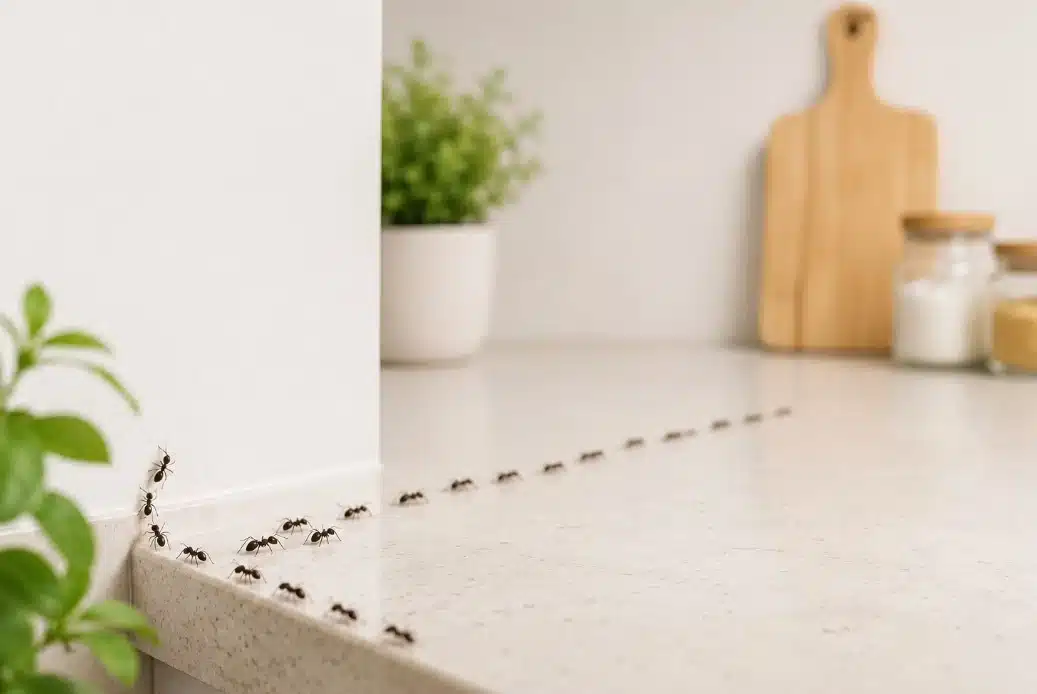
When an ant finds a food source, it can establish a chemical trail using pheromones, making it easier for other ants in the colony to follow the same route. This explains the characteristic trails of ants that can suddenly appear in a kitchen or on a terrace.
How to Find Out Where Ants Are Coming From
Before trying to deal with the problem, it is worth spending a few minutes observing the route the ants are taking.
Instead of focusing only on the area where you find the insects, try following their trail in the opposite direction. This can help you identify their entry point and may even lead you closer to the location of the nest.
Pay particular attention to cracks, joints, skirting boards, door and window frames, gaps around pipes, and areas close to the exterior.
However, finding the nest is not always easy. The ant colony may be hidden inside a wall, beneath the floor, behind furniture, on a terrace, or even outside the property.
How to Find an Ant Nest in Your Home
Seeing an occasional ant does not necessarily mean there is a nest inside your home. However, if ants appear continuously or in large numbers, it is worth investigating.
Some signs that may indicate there is a colony nearby include:
- Ants appearing in the same place every day.
- Trails of ants following a consistent route.
- Insects entering and leaving through a crack.
- A concentration of ants around a particular area.
- Ants reappearing shortly after the area has been cleaned.
A useful strategy is to follow their route without immediately removing the ants you are observing. This can help you identify their entry point and determine whether they are heading outdoors or towards a hidden space inside the property.
How to Get Rid of Ants in the Home
To control an ant problem, it is advisable to combine several measures. The aim should not only be to remove the ants you can see, but also to reduce the things that attract them and make it more difficult for them to enter your home.
- Remove Food Sources
This is one of the most important preventive measures.
Clean up crumbs and food scraps, avoid leaving dirty dishes for long periods, and pay particular attention to sweet foods, ripe fruit, and pet food.
It is also advisable to store flour, sugar, cereals, biscuits, and other foods in properly sealed containers.
- Clean Ant Trails
When you see a trail of ants, cleaning the surface does more than simply remove the insects.
Ants use chemical signals to communicate and establish routes to food sources. Thoroughly cleaning the surface helps remove these trails and can make it more difficult for other ants to follow exactly the same route.
- Check Cracks and Entry Points
If you have discovered where the ants are entering, inspect the area carefully.
Sealing cracks, damaged joints, and small openings can help prevent further entry. It is also worth checking door and window frames, as well as gaps around pipes and utility installations.
- Control Moisture
Ants also need water.
Small leaks, condensation, or areas that remain damp can encourage their presence. Pay particular attention to sinks, bathrooms, utility rooms, and pipes.
Repairing leaks and keeping these areas dry helps create an environment that is less attractive to ants.
How to Get Rid of an Ant Nest
Finding the ant nest can significantly change how the problem is addressed.
Simply removing the ants that are searching for food may temporarily reduce their presence, but the colony can remain active.
Depending on the species and the location of the nest, different control methods may be used. When using biocidal products, baits, or other specific treatments, it is essential to follow the manufacturer’s instructions and take extra precautions if there are children or animals in the home.
If the nest is in an inaccessible location, the infestation is significant, or the ants continue to return despite the measures taken, it may be advisable to contact a professional pest control specialist.
How to Prevent Ants from Appearing
Prevention is particularly important because it makes it more difficult for ants to find reasons to establish routes into your home.
Good practices include keeping surfaces clean, storing food correctly, emptying rubbish bins regularly, avoiding leaving pet food out for extended periods, and checking potential entry points.
It is also advisable to pay particular attention during the months when ants are most active. As temperatures rise, it is common to see increased ant activity in homes, terraces, and gardens as they search for food and water.
Ant Repellents: What Options Are Available?
In addition to cleaning, prevention, and nest-control measures, there are solutions designed to repel ants or discourage their presence in certain areas of the home.
These range from traditional methods to electronic devices.
It is important to distinguish between eliminating an existing colony and using a system designed to repel ants. A repellent should not be confused with an insecticide: its purpose is to help keep these insects away from the protected area.
For this reason, a household strategy can combine measures such as removing food sources, sealing entry points, addressing moisture problems, and using repellent systems.
Electronic Ant Repellents
Electronic ant repellents provide an interesting alternative for people who want to reduce the everyday use of insecticides or pesticides in their homes.
One of their main advantages is convenience: depending on the technology used, they can work simply by being plugged into the electrical supply, without requiring the regular application of sprays or other products.
Before choosing one, it is advisable to check what technology it uses, the area it can cover, how it should be installed, and what types of pests it is designed for.
The manufacturer’s instructions should always be followed to ensure proper use.
Electromagnetic Technology for an Ant-Free Home
Among the electronic alternatives available is the Diamond Bell® DB-04 Ant Repellent, a solution designed to repel ants in the home without the need for chemicals or pesticides.
The Diamond Bell® DB-04 uses DB electromagnetic technology and is designed as a convenient alternative for keeping ants away from protected areas.
Its main features include:
- DB electromagnetic technology: a latest-generation repellent designed to keep ants away without using toxic substances.
- Safe and eco-friendly: free from chemicals and pesticides, making it suitable for homes with children and pets.
- Silent and discreet: it does not emit sounds or odors, making it suitable for use in sleeping and relaxation areas.
- Cost-effective: requires no replacement refills and has an estimated service life of 10 years.
- Effective coverage: suitable for areas of up to 125 m² per electrical phase.
- Easy to use: simply plug it into a wall socket.
- LED indicator: allows you to check the operating status of the device.
- Connector type: wall plug.
- Designed and manufactured in Spain.
Using an electronic ant repellent can complement the preventive measures discussed throughout this article. Keeping the kitchen clean, storing food correctly, removing sources of moisture, and sealing potential entry points can all help create an environment that is less attractive to ants.
Rather than taking action only when ants appear, you can adopt a more comprehensive approach to ant prevention and repellence in the home, combining good household practices with solutions such as the Diamond Bell® DB-04 Ant Repellent.