Published on21 de August de 2026
How to Get Rid of Rats Effectively
How Ultrasonic Rat Repellers Work and How to Choose the Right Solution
If you are wondering how to get rid of rats effectively, the key is to combine prevention, proper hygiene, and suitable rodent-control solutions. Rats and mice can damage property, contaminate food, and quickly become a serious problem in homes, warehouses, offices, restaurants, and industrial facilities. From sealing potential entry points to using poison-free rat repellers, choosing the right approach can help keep rodents away and protect your space over the long term.
Dealing with rats and mice can be challenging, whether they appear in homes, warehouses, offices, restaurants, or industrial facilities. In addition to damaging cables, packaging, furniture, and structures, rodents can contaminate food and work areas, making prevention and control particularly important.
There are several ways to get rid of rats or discourage them from entering a property, including traps, professional pest control, proofing entry points, and electronic deterrents. For those looking for a poison-free rat control solution, ultrasonic rat repellers can be considered as part of a broader rodent prevention strategy.
These devices are designed to operate continuously and discreetly without the use of poisons, bait, or pesticides. But how do ultrasonic rat repellers work, and what should you consider when choosing one?
What Is a Rat Repeller?
A rat repeller is a device designed to discourage rodents from entering or remaining in a particular area. Depending on the model, different technologies may be used, with products available for homes, businesses, warehouses, and large industrial facilities.
Ultrasonic rat and mouse repellers emit high-frequency sound waves intended to create an uncomfortable environment for rodents, without relying on toxic substances.
Because they do not require poison or bait, ultrasonic devices can be a convenient option in locations where avoiding chemical pest-control products is a priority.
How Do Ultrasonic Rat Repellers Work?
Ultrasonic rat repellers generate high-frequency sound waves intended to discourage rats, mice, and, depending on the device, other pests from remaining within the protected area.
These devices are designed to operate discreetly and, in normal use, the ultrasonic frequencies they emit are generally outside the human hearing range.
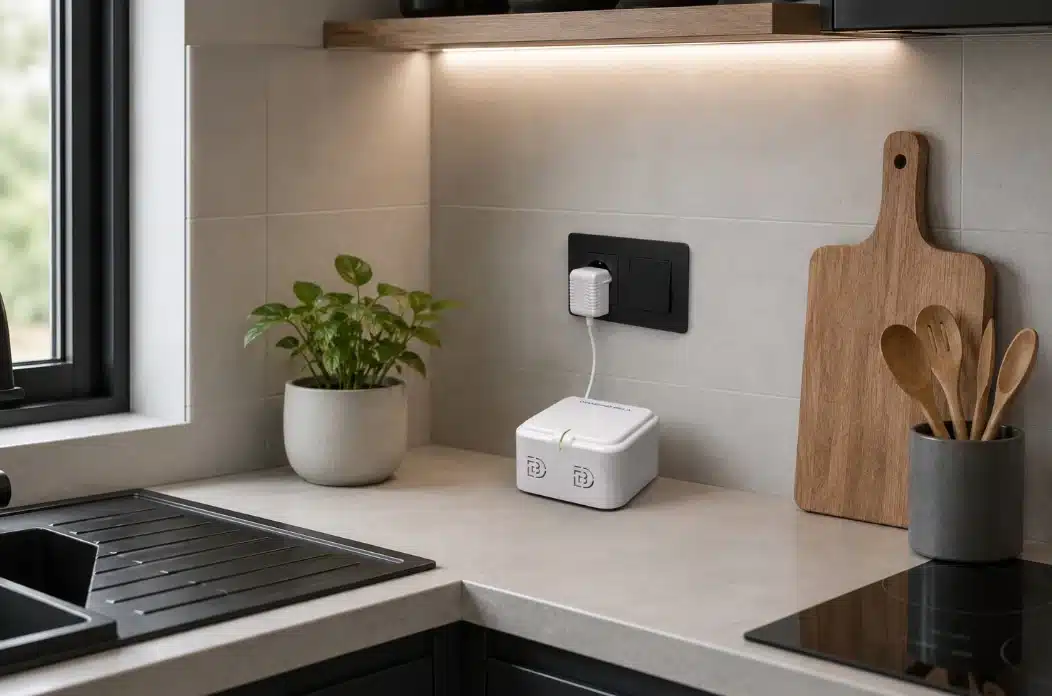
Installation is usually straightforward. With plug-in models, the device is connected to a power outlet and positioned strategically in the area to be protected.
However, correct placement is important. Ultrasonic waves do not travel freely through walls and can be affected by furniture, shelving, machinery, stored goods, and other physical obstacles. The size and layout of the space should therefore be taken into account when deciding where to install a device and how many units may be required.
Ultrasonic repellers are best considered as one element of a wider rodent-control strategy that also includes good hygiene, proper food storage, and sealing potential entry points.
Advantages of Using a Poison-Free Rat Repeller
One reason people choose ultrasonic rat repellers is that they offer a way to discourage rodents without relying on conventional chemical pest-control products.
Potential advantages include:
- No poisons or pesticides: no toxic bait or chemical pesticides need to be placed in the protected area.
- Easy to use: plug-in models generally require only a suitable power outlet.
- Continuous operation: they are designed to remain switched on for extended periods.
- No consumables: certain models require no bait, cartridges, or other regularly replaced components.
- Discreet operation: they produce no chemical odors and are designed to operate unobtrusively.
- No traps to empty: unlike conventional traps, electronic repellers do not require captured rodents to be handled.
These characteristics can make electronic rat repellers a convenient option for both residential and professional environments.
Where Can an Ultrasonic Rat Repeller Be Used?
Choosing the right ultrasonic rat repeller depends largely on the size, layout, and intended use of the area you want to protect.
Rat Repellers for the Home
At home, rat and mouse repellers can be installed in areas where rodents are more likely to appear, including garages, storage rooms, kitchens, pantries, basements, and rooms close to outdoor access points.
For effective coverage, consider the layout of each room and any furniture or other objects that could obstruct the ultrasonic waves.
Rat Repellers for Warehouses and Businesses
Professional environments often have different requirements from residential properties. Warehouses, offices, shops, restaurants, and other commercial premises may require devices designed to cover significantly larger areas than standard household models.
When comparing products, check the manufacturer’s recommended coverage and consider whether shelving, partitions, stored goods, or machinery could affect the distribution of ultrasonic waves.
Rat Repellers for Industrial Facilities
Industrial facilities often contain large open areas, extensive shelving, stored goods, machinery, and multiple potential entry points for rodents.
In these environments, it can be advisable to choose professional rat repellers specifically designed for larger spaces and to combine them with appropriate preventive measures.
How to Choose the Best Rat Repeller
Not all rat repellers offer the same specifications or are designed for the same environments. Before choosing a device, consider the following factors.
1. Coverage Area
Coverage is one of the most important considerations. A small storage room and a warehouse covering several hundred square metres have very different requirements.
Check the maximum coverage stated by the manufacturer, but also consider the actual layout of the space and any obstacles that could interfere with ultrasonic waves.
2. Technology
If avoiding poisons and pesticides is a priority, an ultrasonic device may be worth considering.
Choose a product designed for the specific pests you want to deter and always follow the manufacturer’s installation and operating instructions.
3. Installation
Plug-in rat repellers are particularly convenient because they generally require no building work or complex installation. Simply connect the device to an appropriate power outlet and position it according to the manufacturer’s recommendations.
4. Consumables and Maintenance
Some pest-control systems require regular purchases of bait, liquids, cartridges, or replacement components.
An electronic rat repeller that does not require consumables can reduce ongoing maintenance and replacement costs, particularly when used continuously.
5. Suitability for the Intended Environment
Before installing any pest-control device, check the manufacturer’s instructions regarding its intended environment and any precautions relating to people or animals.
This is particularly important in homes with pets, as some animals may be sensitive to high-frequency sounds.
How to Help Prevent Rats and Mice
No single device should replace basic rodent-prevention measures. A comprehensive approach can help make a property less attractive and less accessible to rats and mice.
Store food in properly sealed containers, keep rubbish bins securely closed, clean up food scraps and spills, inspect the property for cracks and holes, and keep storage areas tidy. Potential entry points around doors, pipes, drains, vents, and other openings should also be inspected and sealed where appropriate.
Regularly check for signs of rodent activity, including droppings, gnaw marks, damaged packaging, nesting materials, and noises coming from ceilings, walls, storage areas, or other rarely disturbed spaces.
If you are dealing with a serious, established, or persistent infestation, professional pest-control assistance may be necessary.
Diamond Bell® DB-06: Professional Ultrasonic Rat Repeller for Large Areas
When you need to protect a large area, choosing a device designed specifically for professional or high-coverage applications is particularly important.
The Diamond Bell® DB-06 Ultrasonic Repeller is designed to help repel rats, mice, cockroaches, squirrels, and bats without the use of chemical pesticides or poison. Its DB ultrasonic technology makes it suitable for a range of residential, commercial, and professional environments.
With a stated coverage of up to 550 m², the Diamond Bell® DB-06 is designed for large homes, warehouses, offices, restaurants, industrial facilities, and other locations where extensive coverage may be required.
Its main features include:
- DB ultrasonic technology: designed to deter rats, mice, cockroaches, squirrels, and bats without poison or chemical pesticides.
- Poison-free operation: no toxic bait, chemical pesticides, or similar substances are required.
- Discreet operation: designed to operate without chemical odors and without audible sound during normal use.
- No replacement consumables: no bait or cartridges are required, helping to reduce ongoing maintenance.
- Long service life: designed for an estimated service life of up to 10 years.
- Coverage of up to 550 m²: designed for large residential, commercial, and professional spaces.
- Easy installation: simply plug the device into a suitable wall socket.
- LED indicator: allows you to check the operating status of the device at a glance.
- Designed and manufactured in Spain.
For users looking for a professional, poison-free rat repeller for large areas, the Diamond Bell® DB-06 offers a combination of extensive coverage, straightforward plug-in installation, ultrasonic technology, and operation without replacement consumables.
Frequently Asked Questions About Rat Repellers
Do Ultrasonic Rat Repellers Use Poison?
No. Ultrasonic rat repellers use high-frequency sound waves and do not require poison, toxic bait, or chemical pesticides to operate.
Where Should I Place an Ultrasonic Rat Repeller?
Place the device where its ultrasonic waves can travel through the target area with as few obstacles as possible.
Avoid positioning it behind large pieces of furniture, shelving, machinery, or stored goods that could obstruct the sound waves. Always follow the manufacturer’s placement and coverage recommendations.
Can Ultrasonic Rat Repellers Be Used in Large Spaces?
Yes, provided the device is designed for the size and characteristics of the area concerned.
For warehouses, industrial facilities, offices, restaurants, and other large premises, choose a professional model with suitable coverage. The Diamond Bell® DB-06, for example, has a stated coverage of up to 550 m².
Keep in mind that walls, partitions, shelving, machinery, and other obstacles can affect how ultrasonic waves travel, so very large or divided spaces may require additional units.
Do Ultrasonic Rat Repellers Require Maintenance?
Maintenance requirements depend on the device. Models that do not use bait, cartridges, or other consumables generally require less routine maintenance than systems that rely on replacement components.
The Diamond Bell® DB-06 does not require replacement consumables and is designed for an estimated service life of up to 10 years.
How to Get Rid of Rats: Choosing the Right Approach
Getting rid of rats effectively requires more than simply choosing a pest-control device. The size and layout of the property, the severity of the rodent problem, potential entry points, food sources, and the type of control method used should all be taken into account.
Good hygiene, proper food storage, sealing access points, and regular inspections should form the foundation of any rodent-prevention strategy. Ultrasonic rat repellers can then be used as an additional poison-free deterrent where appropriate.
For larger spaces, the Diamond Bell® DB-06 combines ultrasonic technology, stated coverage of up to 550 m², simple plug-in installation, and operation without replacement consumables, making it a practical option for large homes, warehouses, offices, industrial facilities, restaurants, and other professional environments.