Published on2 de September de 2026
How to Keep Bats Away
Bats Near Your Home?
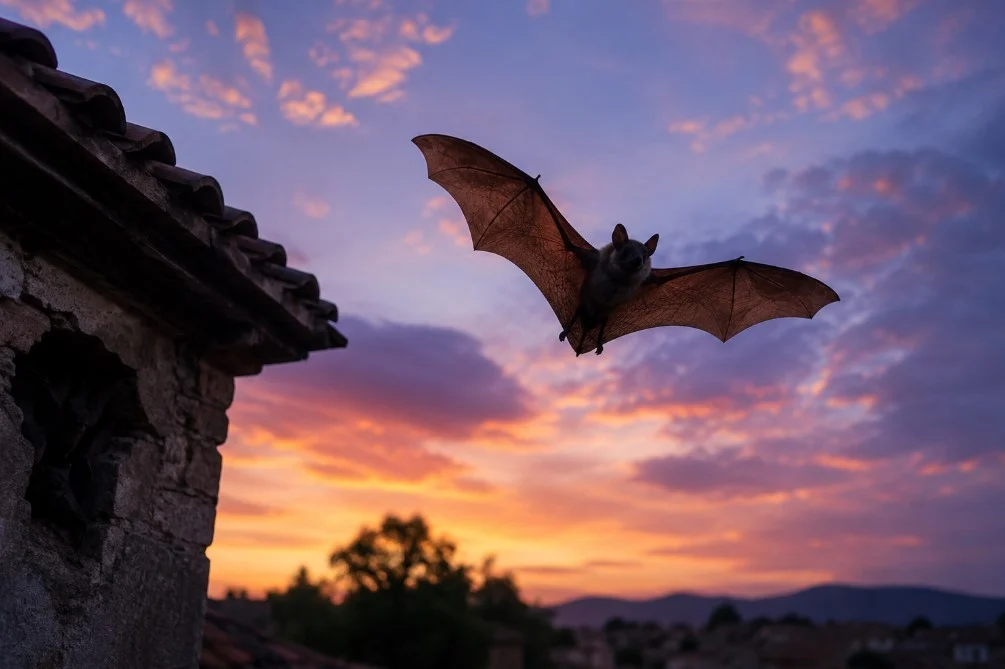
Bats can take shelter in roofs, attics, suspended ceilings, warehouses, garages, and other quiet spaces where they can find protection. Although they play an important role in the ecosystem, their presence inside a home or business can be a nuisance and may lead to problems involving noise, droppings, and dirt.
If you have noticed bats near your home, it is important to deal with the situation responsibly. In this article, we explain how to keep bats away, which methods can help prevent them from returning, and what precautions you should take.
Why Do Bats Enter Homes?
Bats primarily look for quiet, dark places that are sheltered from the weather. As a result, some buildings can become particularly attractive roosting sites.
They are commonly found in:
- Attics and lofts.
- Gaps beneath roof tiles.
- Suspended ceilings.
- Cracks and cavities in exterior walls.
- Garages and storage rooms.
- Industrial buildings and warehouses.
- Shutters, eaves, and other sheltered spaces.
The presence of insects around a property can also attract bats, as many bat species feed on mosquitoes, moths, and other insects.
How to Tell If There Are Bats in Your Home
Before looking for a solution, it is important to determine whether bats are actually roosting in the building.
One of the clearest signs is seeing them enter or leave an opening around dusk. You may also hear faint noises coming from the roof, walls, or suspended ceiling.
Other signs may include an accumulation of droppings beneath a particular area or bats repeatedly appearing around the same part of the building.
Correctly identifying their entry point is essential to resolving the problem effectively.
How to Keep Bats Away Without Harming Them
If you are looking for ways to get bats out of your home, the goal should be to encourage them to leave and then prevent them from using the property as a roost again.
It is important to remember that bats are beneficial to the ecosystem and that many species are protected by law. For this reason, methods that could injure, trap, or kill them should be avoided.
- Locate Their Entry Points
The first step is to find out how the bats are getting into the building.
Observe the property around dusk and pay particular attention to areas such as:
- Gaps between roof tiles.
- Cracks in exterior walls.
- Damaged joints and seals.
- Gaps around pipes.
- Eaves.
- Unprotected vents.
- Small openings in roofs and roofing structures.
Bats can use surprisingly small gaps to gain access to a building.
- Do Not Seal Entry Points While Bats Are Still Inside
One of the most serious mistakes is immediately sealing the hole the bats are using to enter.
If animals are still inside, they could become trapped and die or attempt to gain access to other parts of the building.
Certain times of year may also coincide with breeding periods, when flightless pups may be present. Before carrying out any exclusion or sealing work, it is advisable to check the applicable regulations. If you are dealing with a colony or are unsure how to proceed, contact a wildlife management professional or the relevant wildlife authorities.
- Use Appropriate Exclusion Methods
One technique used to remove bats from buildings involves installing exclusion systems that allow the animals to leave their roost while preventing or restricting their return.
Once it has been confirmed that all bats have left the space and that the work can legally be carried out, the entry points can be sealed.
This approach addresses one of the main causes of the problem: the availability of an accessible roosting site.
- Seal Cracks and Holes
Once you are certain that no bats remain inside, carefully inspect the building.
Repairing cracks, installing suitable screens, and sealing small gaps can significantly reduce the chances of bats returning and establishing another roost.
Pay particular attention to the roof, eaves, chimneys, ventilation ducts, and areas where different exterior building materials meet.
- Keep Attics and Indoor Spaces Well Maintained
A quiet attic with numerous access points can become an attractive shelter for a variety of animals.
Regular inspections can help identify potential problems before a colony becomes established.
Pay particular attention to:
- Displaced or broken roof tiles.
- New cracks.
- Damaged screens or grilles.
- Attic windows that do not close properly.
- Gaps created during building work or installations.
Prevention is usually much easier than dealing with an established infestation later on.
- Ultrasonic Bat Repellents
Another option available on the market is ultrasonic bat repellents.
These devices generate ultrasonic frequencies and are marketed as a chemical-free solution designed to help keep various pests away.
Their main advantage is ease of use: they usually only need to be plugged into an electrical outlet.
However, ultrasonic devices should not replace a proper inspection or the sealing of entry points. Their effectiveness can vary depending on factors such as the layout of the space, existing obstacles, the bat species involved, and the characteristics of the installation.
For this reason, they can be considered a complementary measure within a broader prevention and pest-management strategy.
What Methods Should You Avoid When Trying to Keep Bats Away?
Not all traditionally used remedies are appropriate.
Avoid poisons, toxic products, traps that could cause injury, and any attempt to handle bats directly without the appropriate knowledge or experience.
You should also avoid trapping a colony inside a building.
When a significant number of bats are present, it is generally best to contact wildlife management professionals.
Are Bats Dangerous?
The presence of a bat outdoors is not a problem in itself. In fact, bats perform an important ecological function by consuming large numbers of insects.
The situation is different when they establish a roost inside a home or business.
In these cases, droppings and dirt can accumulate, in addition to the disturbance caused by their activity.
You should never handle a bat directly with your bare hands. If you find a bat that is injured, disoriented, or unable to fly, contact a wildlife professional or the relevant wildlife authorities.
How to Prevent Bats From Returning
Prevention is one of the most effective long-term strategies.
Once the initial problem has been resolved, inspect the building regularly and repair any new entry points as soon as possible.
A preventive strategy can combine sealing cracks and gaps, proper property maintenance, and, where appropriate, complementary deterrent systems.
This helps reduce both the likelihood of bats returning and the risk of other pests entering the property.
Diamond Bell® DB-06 Ultrasonic Repellent
If you are looking for a chemical-free option to complement your preventive measures, the Diamond Bell® DB-06 Repellent is designed to help deter different types of pests using ultrasonic technology.
Repels Rats, Mice, Cockroaches, Squirrels, and Bats With Latest-Generation Ultrasonic Technology
The Diamond Bell® DB-06 Repellent is an effective solution designed to deter rats, mice, cockroaches, squirrels, and bats without the use of chemicals. It uses advanced ultrasonic technology to help protect large areas in the home and is designed to be safe for people and pets.
Its main features include:
- Advanced DB ultrasonic technology: designed to deter rats, mice, cockroaches, squirrels, and bats without the use of toxic substances.
- Safe and eco-friendly: free from chemicals and pesticides, making it suitable for homes with children and pets.
- Quiet and discreet: produces no perceptible sounds or odors, making it suitable for bedrooms and other rest areas.
- Cost-effective: requires no replacement cartridges and has an estimated service life of up to 10 years.
- Wide coverage: designed for large areas of up to 550 m². Its professional format makes it suitable for industrial facilities, offices, warehouses, and hospitality establishments.
- Easy to install: simply plug it into a wall outlet to start using it.
- LED indicator: allows you to visually check the device’s operating status.
- Plug type: wall plug.
- Designed and manufactured in Spain.
The Diamond Bell® DB-06 can be used as a complementary measure to help keep bats and other pests away, particularly when combined with preventive measures such as identifying and addressing potential entry points.
Frequently Asked Questions About Keeping Bats Away
How Can You Keep Bats Away From the Roof?
First, identify where they are entering and exiting. The most effective long-term strategy generally involves allowing the bats to leave safely and then sealing their access points, while always complying with wildlife protection regulations and avoiding any action when flightless pups may still be inside.
How Can You Get Bats Out of the Attic?
Check all potential entry points and avoid sealing them while bats are still inside. Once the bats have been properly excluded, cracks, roof tiles, and other openings can be repaired to prevent them from returning.
Can Ultrasonic Devices Be Used to Keep Bats Away?
Ultrasonic devices are commercially available for this purpose. They can be used as a complementary measure, although their effectiveness may depend on the characteristics of the space. They should not be considered a substitute for sealing entry points.
What Should I Do If I Find a Bat Inside My Home?
Avoid touching it directly. Keep children and pets away and, when it can be done safely, provide the bat with a clear route to the outdoors. If the animal is injured, unable to fly, or there is any potential risk, contact a wildlife professional or the relevant wildlife authorities in your area.
Conclusion
Knowing how to keep bats away involves more than simply trying to scare them off temporarily. For a lasting solution, it is essential to identify their entry points, allow them to leave safely, and then prevent them from getting back inside.
Proper property maintenance and effectively sealing cracks and gaps are the most important preventive measures. As a complement, chemical-free solutions such as ultrasonic bat repellents can also be used, while always taking into account the characteristics of each property and the applicable regulations.
By following these measures, homes, warehouses, offices, and other spaces can be protected against bats without resorting to toxic substances.