Published on12 de November de 2026
Types of Mosquitoes in Spain
Understanding the main types of mosquitoes in Spain is essential for identifying them, knowing where they are commonly found, and recognising the potential risks they may pose. In this article, you’ll discover the most common mosquito species in Spain, how to tell them apart, and the best ways to prevent mosquito bites.
Spain is home to a wide variety of mosquito species, each with its own characteristics, habits, and behaviour. Although mosquito bites are often little more than a nuisance, particularly during the warmer months, some species can also transmit diseases.
Types of Mosquitoes in Spain: How to Identify Them
Mosquitoes are among the most common insects found in Spain during the warmer months. While many people consider them simply a nuisance, different mosquito species have distinct characteristics, habits, and behaviours.
Some mosquitoes are primarily active at night, while others are more active during the day. Certain species can also act as vectors for disease transmission.
In this guide, we explore the main types of mosquitoes found in Spain, how to identify them, where they typically live, and what measures you can take to avoid their bites.
How Many Types of Mosquitoes Are There in Spain?
More than 60 mosquito species have been recorded in Spain, belonging to several genera, including Culex, Aedes, Anopheles, and Culiseta.
Not all species have the same geographical distribution or pose the same potential health risks. Some are native species that have been present in Spain for centuries, while others are invasive species that have arrived in recent decades.
The main types of mosquitoes found in Spain include:
- Common mosquito (Culex pipiens).
- Asian tiger mosquito (Aedes albopictus).
- Anopheles mosquitoes, including Anopheles atroparvus.
- Saltmarsh mosquito (Aedes caspius, also known as Ochlerotatus caspius).
- Coastal wetland mosquito (Aedes detritus, also known as Ochlerotatus detritus).
- Culiseta mosquitoes, including Culiseta annulata.
- Asian bush mosquito (Aedes japonicus).
- Korean bush mosquito (Aedes koreicus).
Let’s take a closer look at their main characteristics.
- Common Mosquito (Culex pipiens)
The common mosquito is one of the most widespread mosquito species in Spain. It is frequently found in both urban and rural environments, particularly in areas where stagnant water is present.
Characteristics of the Common Mosquito
- Size: Approximately 4–7 mm.
- Colour: Brown or greyish.
- Activity: Mainly active at dusk and during the night.
- Habitat: Gardens, homes, drains, water tanks, and damp areas.
- Bites: May cause itching, redness, and localised swelling.
Female mosquitoes need blood meals to develop their eggs, while males primarily feed on sugary substances such as nectar.
Is the Common Mosquito Dangerous?
The common mosquito can play a role in transmitting certain pathogens, including West Nile virus.
However, this does not mean that all common mosquitoes are infected or that their bites necessarily cause disease.
- Asian Tiger Mosquito (Aedes albopictus)
The Asian tiger mosquito is one of the best-known invasive mosquito species in Spain. It was first detected in the country in 2004, in Catalonia, and has since significantly expanded its geographical distribution.
How to Identify the Asian Tiger Mosquito
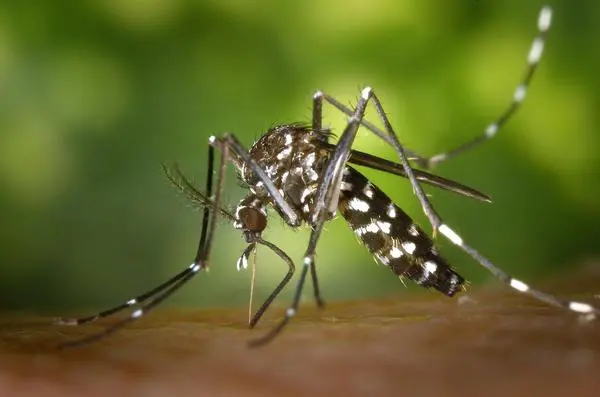
The Asian tiger mosquito has several distinctive physical features:
- A dark, almost black body.
- White stripes on its legs.
- A distinctive white stripe running lengthwise along the upper part of its thorax.
- Generally small in size.
- Primarily active during the day.
Unlike the common mosquito, the Asian tiger mosquito typically bites during daylight hours, particularly in the early morning and late afternoon.
Where Does the Asian Tiger Mosquito Live in Spain?
The Asian tiger mosquito is now established in many parts of Spain, particularly in urban and suburban areas with favourable climatic conditions.
Its larvae can develop in small collections of stagnant water, including plant saucers, buckets, containers, gutters, and other objects found in gardens or on terraces.
What Diseases Can It Transmit?
The Asian tiger mosquito is a potential vector of diseases such as dengue, chikungunya, and Zika.
However, disease transmission requires specific conditions, including the presence of the virus and mosquitoes capable of transmitting it. The presence of Asian tiger mosquitoes alone does not necessarily indicate local transmission of these diseases.
- Anopheles Mosquitoes (Anopheles spp.)
Mosquitoes belonging to the Anopheles genus are particularly important from a historical and public health perspective because certain species can transmit the parasites responsible for malaria.
Several Anopheles species are found in Spain, including Anopheles atroparvus.
Main Characteristics
- Generally slender, elongated bodies.
- Primarily active at dusk and during the night.
- Larvae develop in various aquatic environments.
- Often rest with their bodies positioned at an angle to the surface.
Is Malaria Present in Spain?
Spain was officially declared free of endemic malaria in 1964.
Although Anopheles mosquitoes are present in the country, this does not mean that malaria is routinely transmitted in Spain. Most diagnosed cases are imported, although exceptional instances of local transmission have been documented.
- Saltmarsh Mosquito (Aedes caspius)
The saltmarsh mosquito is commonly found in certain wetlands, coastal areas, and flood-prone environments.
This species can travel considerable distances from its breeding grounds, which explains why it may also be found in towns and residential areas near marshes and natural wetlands.
Characteristics
- Predominantly brown colouring with lighter markings.
- May bite during the day and around dusk.
- Larvae develop in temporarily flooded areas.
- Can appear in large numbers when environmental conditions are favourable.
Its bites can be particularly bothersome when large populations emerge at certain times of the year.
- Coastal Wetland Mosquito (Aedes detritus)
Aedes detritus is another mosquito species associated with coastal environments, saltmarshes, and areas containing brackish water.
How to Recognise It
- Generally has subtle brown and greyish colouring.
- Its larvae develop in suitable aquatic habitats, including environments with relatively high salinity.
- Can cause considerable nuisance near its breeding grounds.
This species is particularly relevant to mosquito management programmes in wetlands and coastal areas.
- Culiseta Mosquito (Culiseta annulata)
Culiseta annulata is a mosquito species found in Spain, particularly in rural environments, damp areas, and locations close to buildings and human settlements.
Main Characteristics
- Relatively large compared with some other common mosquito species.
- Legs featuring pale bands.
- Wings with dark spots.
- Primarily active at dusk and during the night.
Although it can be confused with other mosquitoes because of its banded legs, its appearance and behaviour can help distinguish it when properly identified.
- Asian Bush Mosquito (Aedes japonicus)
The Asian bush mosquito is an invasive species first detected in Spain in 2018.
It is associated with damp environments and can use a variety of natural and artificial water-filled containers to complete its life cycle.
Characteristics
- Dark colouring with lighter markings.
- Legs with pale bands.
- Able to develop in relatively cool environments.
- May be active during daylight hours.
This species is monitored because of its invasive nature and its potential importance as a disease vector under certain conditions.
- Korean Bush Mosquito (Aedes koreicus)
The Korean bush mosquito is another invasive mosquito species that has been detected in Spain.
It can develop in water-filled containers and adapt to environmental conditions that differ from those preferred by other invasive mosquito species.
Main Characteristics
- Dark body with lighter markings.
- Banded legs.
- May be active during the day.
- Currently has a localised distribution that should be checked against up-to-date mosquito surveillance records.
Identifying this species may require specialist examination, as it shares several physical characteristics with other mosquitoes belonging to the Aedes genus.
Comparison of the Main Types of Mosquitoes in Spain
| Mosquito species | Typical activity | Common habitat |
| Common mosquito | Night-time | Urban and rural areas |
| Asian tiger mosquito | Daytime | Gardens and urban areas |
| Anopheles mosquitoes | Dusk and night-time | Various aquatic environments |
| Aedes caspius | Daytime and dusk | Saltmarshes and flood-prone areas |
| Aedes detritus | Variable | Coastal wetlands |
| Culiseta annulata | Dusk and night-time | Damp and rural areas |
| Aedes japonicus | Mainly daytime | Damp environments and water containers |
| Aedes koreicus | Mainly daytime | Water containers and vegetated areas |
Activity patterns and habitats are general guidelines. They may vary depending on the species, temperature, season, and environmental conditions.
Which Mosquitoes Are the Most Dangerous in Spain?
Not all mosquito species have the same ability to transmit diseases.
From a public health perspective, the following species are particularly important:
Asian tiger mosquito: Can transmit viruses such as dengue, chikungunya, and Zika when the necessary epidemiological conditions are present.
Common mosquito: Certain populations can play a role in transmitting West Nile virus.
Anopheles mosquitoes: Some species can transmit malaria, although Spain does not currently experience regular endemic transmission of the disease.
It is important to distinguish between a mosquito species’ potential ability to transmit a disease and the actual risk of infection in a particular area.
When Is Mosquito Season in Spain?
Mosquito populations generally increase during the warmer months, although their activity depends on the species and the climatic conditions of each region.
As a general guide:
- Spring: Populations of certain mosquito species begin to increase.
- Summer: Mosquito activity is typically at its highest.
- Autumn: Some species remain active as long as temperatures are favourable.
- Winter: Mosquito activity generally decreases, although certain species may survive or remain active in suitable environments.
Rainfall, temperature, and the availability of breeding sites all have a direct influence on mosquito populations.
How to Prevent Mosquito Bites in Spain
Prevention is one of the most effective ways to reduce the nuisance and potential risks associated with mosquitoes.
Remove Standing Water
Many mosquito species require water to complete their life cycle.
For this reason, it is advisable to regularly empty plant saucers, buckets, containers, and other objects where water may accumulate.
Install Mosquito Screens
Installing mosquito screens on doors and windows helps prevent mosquitoes from entering your home.
Maintain Gardens and Terraces
Regularly check areas where water may collect, clean gutters, and remove unused containers that could become mosquito breeding sites.
Pay Attention to Peak Mosquito Activity
Asian tiger mosquitoes are typically active during the day, while common mosquitoes are particularly active at dusk and throughout the night.
Understanding these habits allows you to take preventive measures when exposure to mosquito bites is most likely.
Choose the Right Mosquito Repellents
One of the best ways to reduce the nuisance caused by the different types of mosquitoes in Spain is to use suitable mosquito protection solutions.
At DIAMOND BELL®, we offer a range of AntiMosquitos DIAMOND BELL® mosquito repellents, including personal and portable models designed to help protect the whole family from mosquitoes.
Thanks to their versatility, these mosquito repellent solutions are a practical choice for both indoor and outdoor use, whether you’re relaxing at home, spending time in the garden, enjoying your terrace, camping, or taking part in outdoor activities.
Discover our AntiMosquitos DIAMOND BELL® mosquito repellent solutions and enjoy your favourite moments with greater comfort and peace of mind.
Frequently Asked Questions About Mosquitoes in Spain
What Is the Most Common Mosquito in Spain?
Culex pipiens, commonly known as the common mosquito, is one of the most widespread species in Spain. However, the abundance of each mosquito species depends on the geographical area and time of year.
How Can You Tell an Asian Tiger Mosquito From a Common Mosquito?
The Asian tiger mosquito has a dark body with distinctive white markings and a white stripe running along its thorax. The common mosquito generally has a more uniform brown or greyish appearance.
Are There Dangerous Mosquitoes in Spain?
Yes. Some mosquito species found in Spain can transmit pathogens. However, the presence of a mosquito does not mean that it is infected. The actual risk depends on the epidemiological situation in each area.
Why Are There So Many Mosquitoes in Spain During Summer?
Warm temperatures encourage the development of many mosquito species, particularly when suitable water sources are available for breeding.
Do All Mosquitoes Bite?
No. In mosquito species that feed on blood, only females bite, obtaining the nutrients needed to develop their eggs. Male mosquitoes do not bite.
Where Do Mosquitoes Lay Their Eggs?
It depends on the species. Some mosquitoes lay their eggs directly on the water’s surface, while others deposit them on surfaces that may later become flooded.
Know the Different Types of Mosquitoes in Spain and Protect Yourself From Their Bites
Spain is home to numerous mosquito species, each with its own characteristics, habits, and preferred habitats.
The common mosquito and the Asian tiger mosquito are among the best-known species, but many others can be found in saltmarshes, wetlands, and other natural environments.
Identifying the main types of mosquitoes in Spain is essential for understanding their behaviour, preventing bites, and reducing mosquito breeding sites.
To help keep mosquitoes at bay, it is important to eliminate unnecessary standing water, install mosquito screens, and use suitable protection solutions.
With AntiMosquitos DIAMOND BELL® mosquito repellents, available in personal and portable models, you can enjoy practical mosquito protection both indoors and outdoors, helping you keep mosquitoes away and spend more quality time with your family in greater comfort and peace of mind.